
Self Exclusion NZ Options
Self exclusion in New Zealand is one of the strongest harm-reduction tools available to people who want to stop or limit access to gambling. It is not a casual account setting and it should not be treated as a minor preference. Self exclusion is a protective step for situations where gambling has become stressful, difficult to control, financially harmful, secretive, or emotionally damaging.
In plain terms, self exclusion means asking a gambling operator or venue to block your access for a defined period. The purpose is to remove the repeated decision point. Instead of having to resist gambling every time an urge appears, the exclusion creates an external barrier. That barrier can give a person time to stabilise money, rebuild routines, contact support, and reduce harm.
In New Zealand, gambling harm is treated as a public health issue, and support is available for people affected by their own gambling or someone else’s gambling. The Department of Internal Affairs explains that harm minimisation rules apply to pokies and casino gambling, while the Problem Gambling Foundation describes self-exclusion as a legally binding agreement between a person and a gambling operator.
What Self Exclusion Means in New Zealand
Self exclusion is different from simply choosing not to gamble for a while. A private decision depends on willpower. Self exclusion adds a formal restriction. In venue-based gambling, this may mean the person is excluded from entering gambling areas at casinos, pubs, clubs, hotels with pokie machines, or other relevant venues. The Department of Internal Affairs notes that when a person requests an exclusion order, venues may need identification or a photo so the person can reasonably be identified if they enter a gambling area while excluded.
This matters because self exclusion is designed to work in real situations, not only as a written promise. If someone is excluded but returns to a venue, staff should be able to recognise the person and support the exclusion process. The Gambling Helpline explains that under New Zealand law, if a person identifies themselves as having a gambling problem to an operator of a class 4 gambling venue or casino, the operator must issue an exclusion order.
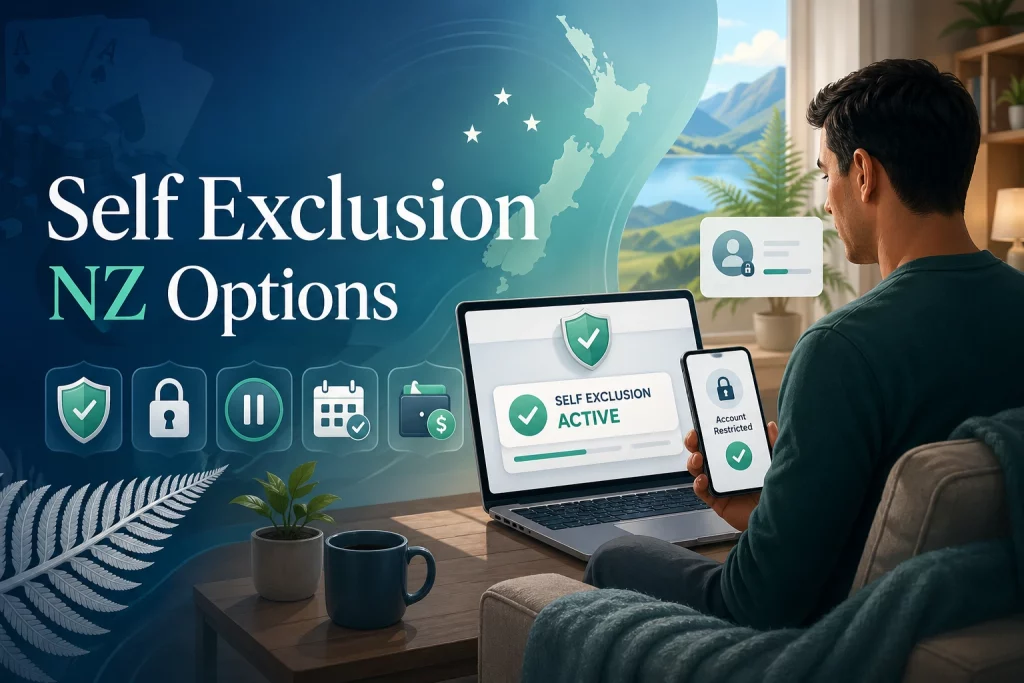
For online gambling environments, self exclusion usually works through the account system. A person may request account closure, time-out, marketing removal, deposit blocking, or platform-level exclusion. Online exclusion tools can vary depending on the operator, so the request should be direct and recorded. The safest wording is clear: “I am experiencing gambling harm. Please apply self-exclusion, close or restrict my account, and remove me from marketing.”
Self exclusion should not be delayed until gambling harm becomes severe. It is appropriate when someone repeatedly breaks limits, chases losses, hides gambling, borrows money to gamble, feels unable to stop, or keeps returning after deciding to quit. The tool is there to reduce access before further harm occurs.
| Self Exclusion Option | How It Works | Best Used When | Important Note |
| Venue Self Exclusion | A person requests exclusion from gambling areas at casinos or venues with pokie machines | Gambling happens at physical venues or pokies locations | Identification may be needed so staff can apply the exclusion properly |
| Online Account Self Exclusion | The gambling account is closed, restricted, or blocked for a set period | Online gambling is difficult to control | The request should be saved as proof, including emails or chat transcripts |
| Time-Out | A temporary break blocks access for a shorter period | The person needs a cooling-off period after risky behaviour | Useful, but weaker than full self exclusion for addiction-level harm |
| Marketing Removal | The person asks to stop promotional emails, texts and app notifications | Promotions trigger urges to return | Should be combined with account restrictions where gambling harm exists |
| Support-Assisted Exclusion | A counselling or gambling harm service helps the person complete exclusion steps | The person feels overwhelmed or unsure what to request | NZ support services can help with practical steps and planning |
Why Self Exclusion Is Stronger Than a Personal Promise
Many people try to stop gambling privately before using self exclusion. They may promise themselves they will not deposit again, will avoid certain sites, will stop after one more session, or will only play when they feel calm. These promises can work for some people, but they are often too weak when gambling harm has already become repetitive.
The problem is that gambling urges usually appear in emotional moments. A person may feel stressed, ashamed, bored, hopeful, angry, or desperate to recover money. In that state, the original promise becomes negotiable. Self exclusion helps because it removes or reduces access before the urge arrives.
The strongest feature of self exclusion is that it changes the environment. It does not ask the person to win a mental argument every time. It places a barrier between the person and gambling access. That barrier can be especially useful during payday, late-night phone use, after arguments, after debt pressure, or after receiving promotional messages.
Self exclusion is also useful because it creates a clear signal. It tells the person, the operator, and sometimes support services that gambling is no longer a normal entertainment activity. It has become something that needs structured protection.
Self Exclusion and Online Account Access
For online gambling, account access is often the first risk point. A person may open the Login page automatically, even after deciding not to gamble. This is why self exclusion should target the account itself, not only the intention to avoid play.
When requesting online self exclusion, the person should be direct. Vague wording such as “I want to take a break” may lead to a weaker time-out or standard account closure. If the reason is gambling harm, the message should say so. This helps the operator apply the correct protection process.
The person should also ask for marketing removal. Promotional messages can weaken recovery by creating a reason to return. A Bonus offer, free spins message, cashback reminder, or loyalty notification can make gambling feel urgent or valuable again. For someone seeking exclusion, these messages are not benefits. They are triggers.
A stronger request includes several elements: self-exclusion, account closure or restriction, promotional removal, payment blocking if available, and written confirmation. After sending the request, the person should save screenshots or emails. If live chat is used, the transcript should be downloaded or copied.
Self Exclusion Before New Account Creation
A common harm pattern is opening new accounts after trying to stop. The person may feel that a new account is different, safer, or easier to control. In reality, it often restarts the same behaviour. The Sign up stage can become a relapse point because it offers a fresh account, fresh promotions, and a new excuse to continue.
If someone has already self-excluded or decided to stop, creating new gambling accounts should be avoided. It can bypass the original protective decision. It can also increase secrecy and make the problem harder to track.
A practical rule is simple: if the thought appears, “I will just create one new account,” that is a signal to pause and contact support. The person is not looking for entertainment at that point. They are looking for access. That distinction matters.
Online self exclusion works best when combined with blocking tools, payment limits, app removal, and support contact. Account-level exclusion alone may not cover every website or every gambling product. The person should close as many access points as possible.
Self Exclusion and Game-Specific Triggers
Different gambling products can trigger different behaviours. For some people, Slots are the main risk because they are fast, repetitive, and easy to play for long periods. For others, live casino, racing, sports betting, instant games, or pokies may be the primary issue. Self exclusion should match the person’s real gambling pattern.
If the person mostly gambles online, online account restrictions and website blocking are essential. If the person mostly uses physical venues, venue exclusion is essential. If the person uses both, both types of barriers may be needed.
The Games lobby can also be a trigger because it encourages browsing. A person may not plan to gamble heavily but starts exploring games, checking features, or looking for something that “feels right.” This browsing can become the first step back into gambling. Self exclusion helps by stopping access before browsing begins.
It is important not to replace one gambling product with another. A person who excludes from slots but moves to table games, or excludes from online casinos but moves to pokies, may still be inside the same harm cycle. The focus should be the behaviour pattern, not only the product.
When Self Exclusion Should Be Considered
Self exclusion should be considered when gambling has become difficult to stop without external barriers. Clear signs include chasing losses, borrowing money, hiding activity, gambling with essential funds, breaking limits, returning after promises to stop, feeling restless without gambling, or using gambling to manage stress.
It should also be considered when family or whānau have raised concerns. Sometimes people close to the situation notice harm before the person gambling fully accepts it. That does not mean every concern is automatically correct, but it is worth taking seriously.
Self exclusion is also appropriate after a relapse. A relapse should not be treated only as a mistake. It is information that the current barriers are not strong enough. If a person relapses after a time-out, full self exclusion may be more suitable. If they relapse after excluding from one account, broader blocking and support-assisted exclusion may be needed.
Support Services Can Help With the Process
Self exclusion can feel intimidating, especially if the person is ashamed, stressed, or unsure where to begin. New Zealand support services can help. The Problem Gambling Foundation says it provides free counselling, advice and support for people affected by gambling, and Safer Gambling Aotearoa provides guidance and local support pathways, including the 24/7 Gambling Helpline number and free text option.
A support worker can help the person decide which exclusions are needed, how to communicate with operators, how to protect money, and how to build a plan for urges. This can be especially useful if the person has multiple gambling accounts, uses both online and venue gambling, or has already tried to stop several times.
The person does not need to have everything organised before asking for help. A simple message or call is enough: “I need help self-excluding because gambling is causing harm.” From there, support services can help turn that first step into a practical plan.
Time-Outs, Account Closure, Blocking Tools and Stronger Exclusion Layers
Self exclusion is most effective when it is not used alone. A single barrier can help, but a layered protection plan is stronger. Online gambling is available through websites, apps, payment methods, emails, search results, advertisements, bookmarks, saved passwords and social media content. If only one access point is blocked, another may still remain open.
For New Zealand players, the best approach is to choose the right mix of tools: time-out, self exclusion, account closure, marketing removal, payment controls, device blocking and support contact. These tools are related, but they are not the same. A time-out creates a short pause. Self exclusion creates a stronger restriction. Account closure may close one account but may not stop new registration elsewhere. Blocking tools can reduce access across devices. Payment controls can reduce deposit ability.
Time-Out Versus Self Exclusion
A time-out is usually a temporary cooling-off tool. It may last for a short period such as one day, one week, or one month, depending on the operator. During that period, the account may be restricted from gambling activity. Time-outs are useful when a person notices early risk, has had an emotional session, or wants to interrupt repeated play before it becomes more serious.
Self exclusion is stronger. It is designed for people who need a longer and firmer break from gambling. It may last for months, years, or sometimes permanently, depending on the system and operator rules. Self exclusion is more appropriate when gambling has become harmful, compulsive, secretive, or difficult to stop.
The difference is not only length. A time-out can sometimes feel like a temporary reset. Self exclusion communicates that gambling access needs to be blocked because the behaviour is no longer safe. For someone who repeatedly breaks limits, chases losses, or returns after promises to stop, self exclusion is usually the more suitable tool.
| Tool | Main Purpose | Best Situation | Limitation |
| Time-Out | Short temporary break from gambling access | Early warning signs, emotional session, need for a pause | May be too weak if gambling is already out of control |
| Self Exclusion | Stronger formal restriction from gambling access | Chasing losses, broken limits, secrecy, repeated relapse | May need to be applied across multiple operators or venues |
| Account Closure | Closes or deactivates one gambling account | Player wants to stop using a specific account | May not block new accounts unless harm-related exclusion is requested |
| Marketing Removal | Stops promotional emails, texts and notifications | Promotions trigger urges to return | Does not block gambling access by itself |
| Blocking Software | Blocks gambling websites or apps on devices | Online access remains a relapse risk | Can be bypassed if not configured strongly |
| Payment Controls | Reduces or blocks gambling deposits | Impulsive deposits are part of the harm pattern | Availability depends on bank, card, wallet or payment provider |
Account Closure Is Not Always Enough
Account closure can be useful, but it should not be confused with self exclusion. A standard closure request may simply deactivate one account. Depending on the operator, it may not prevent the person from reopening the account later, creating a new account, or receiving marketing elsewhere. If gambling harm is involved, the request should clearly say so.
A person who needs protection should avoid vague wording. “Please close my account” may be treated as a normal customer request. “I am experiencing gambling harm and need self exclusion” is stronger and more specific. It tells the operator that the situation relates to harm prevention, not ordinary account management.
This distinction matters because the goal is not only to close a profile. The goal is to stop access during vulnerable periods. If the operator offers separate responsible gambling tools, the person should ask for the strongest available option and request confirmation in writing.
The request should also include removal from promotional contact. If account access is blocked but marketing messages continue, the person may be reminded of gambling repeatedly. Recovery works better when triggers are reduced across the whole digital environment.
Blocking Tools and Device Controls
Blocking tools can support self exclusion by reducing access outside a single operator. These tools may block gambling websites, gambling-related apps, or certain search categories. Some people use browser extensions, parental-control tools, device-level restrictions, DNS filters, or specialist blocking software.
Blocking tools are not perfect, but they create useful friction. Their purpose is not to make gambling impossible in every technical sense. Their purpose is to slow down impulsive behaviour long enough for the urge to weaken or for the person to use support.
Device controls should be applied to the devices actually used for gambling. If the person mainly gambles on a phone, phone controls matter most. If gambling happens on a laptop late at night, laptop restrictions and night routines are important. If more than one device is used, all devices should be reviewed.
A useful approach is to ask: “Where does gambling usually start?” If it starts from a saved bookmark, delete it. If it starts from an app icon, remove it. If it starts from email offers, unsubscribe and filter messages. If it starts from searches, block gambling keywords or websites. The barrier should be placed at the real entry point.
Payment Controls and Deposit Barriers
Payment barriers are essential when impulsive deposits are part of the gambling pattern. A person may not plan to gamble during the day, but when stress appears, quick payment access can turn an urge into a deposit within seconds. Slowing that process down is valuable.
Payment controls may include removing saved card details, reducing card limits, disabling certain online payment features, separating essential funds, using bank alerts, or asking a financial institution about gambling merchant blocks where available. The exact options depend on the bank and payment provider.
The main goal is to protect essential money. Rent, food, transport, bills, family obligations, debt payments and savings should not be exposed to gambling impulses. Some people benefit from moving essential funds into an account that is less accessible from mobile payments or gambling websites.
Financial barriers should be practical, not symbolic. If one card remains saved on a gambling site, the barrier is weak. If the person can transfer money instantly to a gambling-friendly method, the barrier may still fail. A stronger plan looks at every route money can take toward gambling.
Marketing Removal as a Protection Tool
Promotional contact is a common relapse trigger. Emails, texts, app notifications, free spin offers, cashback reminders, VIP messages and personalised deals can all create a sense of urgency. For someone trying to stop gambling, these messages are not harmless marketing. They are risk cues.
Marketing removal should be requested directly. The person can write: “Please remove me from all marketing communication, including email, SMS, phone, push notifications and promotional offers.” If the person is self-excluding, this should be included in the same message.
The person should also clean their inbox and phone. Old promotional emails can still trigger gambling if they remain visible. Searching an inbox for casino names, bonus terms or betting messages and deleting or filtering them can reduce cues.
If promotional messages continue after a self-exclusion request, the person should save evidence and contact support again. Persistent marketing after a harm-related exclusion request should be treated seriously because it can undermine recovery.
Choosing the Right Level of Protection
The right tool depends on the level of harm. Someone who simply wants a short break after spending more time than planned may start with a time-out and deposit limits. Someone who has chased losses, borrowed money, hidden gambling, or repeatedly failed to stop should use stronger barriers.
A simple decision structure can help. If gambling still feels optional and controlled, limits and time-outs may be enough. If gambling feels urgent, secretive, or difficult to stop, self exclusion is more appropriate. If access remains easy after self exclusion, blocking tools and payment controls should be added. If the person keeps finding new routes to gamble, support services should become central to the plan.
There is no advantage in choosing the weakest tool when harm is already clear. Stronger protection is not an overreaction if gambling has caused stress, debt, secrecy or repeated loss of control.
Self Exclusion and Support Contact
Self exclusion works best when paired with support. Exclusion reduces access, but support helps address the pattern behind the gambling. That pattern may include stress, debt, loneliness, boredom, trauma, anxiety, alcohol use, social pressure or habit.
Support services can help a person build a realistic plan. They can help with trigger mapping, money protection, family conversations, relapse response and local help options. Support is also useful for people affected by someone else’s gambling.
The person should not wait until they feel ready to explain everything perfectly. A simple first message is enough: “I need help with self exclusion because gambling is becoming harmful.” From there, the conversation can become more specific.
How Self Exclusion Works in Real Life
Self exclusion works best when it is treated as a practical safety system, not as a single button or one-time request. In real life, gambling access can appear through many routes: a saved website, a phone app, a physical venue, a promotional email, a social media advert, a search result, a payment method, or even a conversation with someone who still gambles. For New Zealand players, the strongest self exclusion plan addresses the actual places where gambling usually begins.
This is important because exclusion is not only a legal or account-level measure. It is also a behaviour-management tool. The person is trying to reduce the number of moments where they must make a difficult decision under pressure. If the exclusion removes one gambling route but leaves several others open, the plan may still be too weak.
Online Self Exclusion in Practice
Online self exclusion should begin with a clear request to the operator. The person should avoid vague wording. Instead of saying, “I want to close my account for now,” the request should explain that gambling harm is involved. A stronger message is: “I am experiencing gambling harm. Please apply self exclusion to my account, block future access where possible, and remove me from all marketing communication.”
The request should be sent through an official support channel: live chat, email, responsible gambling page, or account support form. The person should save proof. Screenshots, emails, chat transcripts, timestamps, and confirmation messages are useful because they create a record of the request.
If the site has a responsible gambling dashboard, the person should check whether the exclusion has been applied. If account access is still open after confirmation, support should be contacted again. The tone should remain direct: “I requested self exclusion because of gambling harm. Please confirm that access and marketing have been blocked.”
Online exclusion should also be supported by personal barriers. The account may be blocked, but the person may still search for other sites. That is why website blocking, payment controls, and support contact are needed.
Physical Venue Exclusion
Physical venue exclusion is relevant when the person gambles at casinos, pubs, clubs, hotels, or venues with pokie machines. In New Zealand, venue-based exclusion may require the person to provide identification or a photograph so staff can reasonably identify them if they return to gambling areas while excluded.
This process may feel uncomfortable, but it has a practical purpose. Venue exclusion cannot work if staff cannot identify the excluded person. The information is not meant to shame the person. It is meant to support the restriction and reduce access during risky moments.
Someone who usually gambles at several local venues should think broadly. Excluding from only one venue may not be enough if another venue is nearby. Support-assisted exclusion can help identify where exclusions should apply and how to complete the process.
Whānau or trusted support people can also help with this step. They may attend appointments, help gather identification, support the conversation, or help the person avoid venues during the early exclusion period.
| Real-Life Situation | Main Risk | Self Exclusion Response | Extra Barrier to Add |
| Late-night online gambling | Fatigue and private device access reduce control | Apply account self exclusion and remove gambling apps | Use device blocks and keep the phone away from the bed |
| Payday gambling | Money becomes available and urges increase | Exclude from accounts before payday arrives | Move essential funds and set banking limits in advance |
| Pokies after work | Routine venue access becomes automatic | Request venue exclusion from relevant gambling locations | Change route home and arrange another activity after work |
| Promotional triggers | Emails or texts create urgency to return | Request removal from all marketing lists | Filter or block gambling senders from inbox and phone |
| Relapse after a short break | Time-out was not strong enough | Move from time-out to longer self exclusion | Contact support and strengthen payment restrictions |
Whānau Involvement and Support
Self exclusion can be easier when the person does not do it alone. Whānau, partners, friends, or trusted support people can help with the practical steps. They can sit with the person while requests are sent, help save records, support calls to helplines, or help remove apps and payment access.
Support should not become control through pressure or humiliation. The person seeking exclusion still needs dignity. The most useful role for whānau is to reduce shame and help build structure. A calm statement can help: “We are not here to punish you. We are here to help make gambling harder to access.”
Family members should also protect themselves. If gambling has affected household money, shared accounts, or bills, financial boundaries may be needed. This can include separating essential funds, refusing to provide cash without a support plan, reviewing account access, or seeking financial guidance.
Self exclusion may also affect trust. The person gambling may want the issue to be resolved quickly, but whānau may need time. Consistency matters more than promises. Exclusion, support attendance, honest communication, and financial transparency are stronger than verbal reassurance alone.
Record-Keeping After Exclusion
Record-keeping is a practical part of self exclusion. It helps the person know what has been done and prevents confusion later. A simple folder can include emails, chat transcripts, screenshots, exclusion confirmations, dates, operators contacted, venues included, and marketing-removal requests.
This record is useful if the person receives promotional messages after exclusion. It is also useful if access remains open or if the person needs to contact support again. Clear records make it easier to say, “This exclusion was requested on this date, through this channel, and this confirmation was received.”
Records should not be used to revisit gambling content unnecessarily. The folder should be functional, not something the person repeatedly opens to read old gambling messages. If possible, store only the relevant confirmations and delete promotional material.
Relapse Prevention After Self Exclusion
Self exclusion reduces access, but urges may still appear. This is normal. Exclusion is not meant to remove every thought about gambling immediately. It is meant to prevent the thought from turning easily into action.
A relapse-prevention plan should identify the most likely high-risk moments. These may include payday, late night, stress after work, arguments, alcohol use, sports events, boredom, loneliness, or debt pressure. Each high-risk moment should have a prepared response.
For example, if payday is risky, money should be protected before payday. If late-night gambling is risky, devices should be removed from the bedroom or blocked after a certain time. If stress is risky, the person should have a non-gambling routine ready after work. If promotions are risky, marketing filters should be active.
The goal is not to rely on confidence. Confidence can be useful, but systems are stronger. Recovery becomes more stable when the person does not need to make difficult decisions repeatedly.
When Exclusion Needs to Be Strengthened
Sometimes the first exclusion plan is not enough. If the person continues gambling through other accounts, other venues, alternative payment methods, or new registrations, the plan needs to be strengthened. This should be treated as information, not failure.
A stronger plan may include wider venue exclusion, more online account requests, device-level blocking, payment restrictions, support appointments, whānau involvement, and removal of gambling-related content from social media and email. The person may also need help with debt, stress, or mental health pressure connected to gambling.
If someone repeatedly searches for workarounds after exclusion, that is a serious warning sign. The response should be stronger support and more barriers, not self-blame. Gambling harm can be persistent, especially when the person is under stress.
Self Exclusion and Privacy
Some people avoid self exclusion because they worry about privacy. This concern is understandable. However, exclusion processes usually require enough information to identify the person and apply the restriction properly. Without that information, the barrier may not work.
The person can ask how their information will be used, stored, and protected. They can also ask which venues or accounts the exclusion applies to and whether confirmation will be provided. These questions are reasonable and should be answered clearly.
For online accounts, privacy also means removing marketing and reducing data-based triggers. If a platform continues sending promotional messages after exclusion, the person should record it and contact support again. Marketing should not undermine a harm-reduction request.
Self Exclusion Checklist and Long-Term Protection in NZ
Self exclusion is strongest when it becomes part of a longer protection system. The first request matters, but it is only the beginning. A person also needs to reduce triggers, protect money, avoid new registrations, remove gambling content, use support services, and review whether barriers are still working. Without these extra steps, exclusion may block one path while leaving other paths open.
For New Zealand players, self exclusion should be treated as a practical recovery tool. It does not require a person to explain everything perfectly. It does not require waiting until harm is severe. If gambling has become difficult to control, stressful, secretive, financially damaging, or emotionally disruptive, self exclusion is already relevant.
Complete Self Exclusion Checklist
A useful checklist should cover access, money, marketing, devices, support, and records. The goal is to make gambling harder to reach from every direction. If the person only closes one account but keeps promotional emails, saved cards, gambling apps, and open venue access, the plan remains weak.
The checklist should be completed calmly, ideally with support from a trusted person or gambling harm service. The person should avoid doing it only after a major loss, when shame and panic may make the process harder. If possible, start before the next risky moment, such as payday, late night, a sports event, or a known stress period.
| Checklist Area | Action | Why It Matters | Record to Keep |
| Online Accounts | Request self exclusion from every gambling account used | Stops access where gambling already happens | Email confirmation, chat transcript, date and operator name |
| Physical Venues | Request exclusion from casinos, pokies venues or gambling locations used | Blocks access to real-world gambling triggers | Venue confirmation or exclusion order details |
| Marketing | Ask to be removed from email, SMS, phone and push promotion lists | Reduces relapse triggers from offers and reminders | Screenshot of removal request and confirmation |
| Payments | Remove saved cards, reduce limits, ask about gambling transaction controls | Makes impulsive deposits harder | Bank messages, changed limit confirmations, card-removal proof |
| Devices | Delete apps, block websites, remove bookmarks and saved passwords | Interrupts automatic access from phone or laptop | List of blocks installed and devices updated |
| Support | Contact a gambling harm service or trusted support person | Adds guidance, accountability and relapse prevention | Appointment time, helpline contact, support plan notes |
Clear Wording for a Self Exclusion Request
The wording of the request matters. A vague account-closure message may not activate the strongest available protection. If gambling harm is involved, the person should state that clearly and ask for self exclusion directly.
A practical message can be written like this:
“Hello. I am experiencing gambling harm and I need to stop gambling on this platform. Please apply self exclusion to my account, block access where possible, close or restrict the account under responsible gambling rules, and remove me from all marketing communication including email, SMS, phone calls and app notifications. Please confirm this in writing.”
This message is direct, specific and difficult to misunderstand. It explains the reason, requests the protection, includes marketing removal, and asks for written confirmation. The person should save the response.
If the operator replies with a weaker option, such as a short cooling-off period, the person can respond: “I am not asking only for a short time-out. I am requesting self exclusion because gambling is causing harm.” This keeps the request clear.
How to Maintain Self Exclusion Over Time
Self exclusion needs maintenance. The person should check that the excluded account remains blocked, promotional messages have stopped, and payment methods are not saved on gambling platforms. If gambling-related content still appears in inboxes, search ads or social media feeds, it should be blocked or filtered.
A monthly review can help. The person can ask: Have I tried to access gambling? Have I received gambling marketing? Have I found new websites? Have I had urges around payday or stress? Are my payment barriers still active? Have I spoken with support recently? These questions keep the plan alive.
The review should not become a way to revisit gambling. It should focus only on protection. If checking old accounts or emails creates urges, a trusted person can help with the review instead.
Long-term maintenance also means avoiding “testing control.” A person may feel better after weeks or months and think they can check a site without gambling. This is risky. Recovery is protected by keeping barriers in place, not by testing whether they are still needed.
What to Do If You Receive Marketing After Exclusion
If marketing continues after a self exclusion or harm-related closure request, the person should save evidence. This may include screenshots, email headers, SMS messages, dates and times. Then they should contact the operator and state that marketing is continuing after a gambling harm request.
The response can be simple: “I requested self exclusion and marketing removal on this date. I am still receiving promotional contact. Please stop all marketing immediately and confirm that my account remains excluded.”
The person should also block the sender and filter messages. Waiting for the operator alone may leave triggers active. Recovery works best when the person acts from both sides: formal request and personal blocking.
If promotional contact repeatedly continues, the person may want to contact a gambling harm support service for guidance on next steps. Support workers can help decide how to respond and how to strengthen barriers.
Self Exclusion and Relapse Response
A relapse after self exclusion means the current system needs strengthening. It does not mean the person is hopeless or that exclusion has failed completely. It means another access route remained open or a trigger became stronger than the barrier.
The first response should be immediate harm reduction. Stop gambling, close the device, protect remaining money, tell a support person, and write down what happened. The person should avoid trying to recover the loss. Chasing after relapse usually increases harm.
The next response is review. How did access happen? Was there another account? A venue not included in exclusion? A payment method still available? A gambling email? A friend encouraging betting? A stressful event? Once the route is identified, the plan can be strengthened at that exact point.
Relapse should not be hidden. Secrecy allows the pattern to continue. A short honest message to a support person can help: “I gambled again. I need help strengthening the exclusion plan.” That is a practical recovery step.
Long-Term Protection Habits
Self exclusion is easier to maintain when daily life becomes less connected to gambling triggers. This may involve changing routines, avoiding gambling content, reducing alcohol-related risk, managing payday differently, and creating non-gambling activities during high-risk hours.
If late-night gambling was common, evening phone use may need limits. If payday was risky, money should be moved or protected before payday arrives. If sports betting was the main issue, sports content may need boundaries. If casino browsing was the issue, website and keyword blocks should stay active.
Support habits also matter. Regular counselling, helpline contact, peer support, or whānau check-ins can keep the person connected. Isolation makes relapse easier. Support makes the plan more stable.
Financial habits are part of long-term protection. Budgeting, debt planning, account alerts, spending limits and transparent money management can help rebuild control. The goal is not only to stop gambling, but also to reduce the pressure that may have been feeding gambling behaviour.
Final Guidance for NZ Self Exclusion Options
Self exclusion in New Zealand is not a sign of failure. It is a practical protection tool for people who need stronger barriers between themselves and gambling access. It can apply to online accounts, physical venues, marketing lists, device access and wider recovery planning.
The strongest approach is layered. Request self exclusion clearly. Remove apps. Block websites. Stop marketing. Protect payments. Keep records. Contact support. Tell a trusted person. Review the plan monthly. Strengthen barriers immediately after any relapse.
A person should not wait until gambling harm becomes severe before using exclusion. If gambling has become secretive, stressful, financially damaging, difficult to stop, or connected to chasing losses, self exclusion is already appropriate. The earlier the barrier is used, the more harm it can prevent.
For New Zealand players, the safest message is direct: if gambling is no longer controlled, remove access today and get support before the next urge arrives. Self exclusion works best when it is not treated as a last resort, but as a serious protective step that helps a person regain space, stability and control.






Comments