
Gambling Addiction Help NZ
Gambling addiction help in New Zealand should be treated as a practical support pathway, not as a sign of personal failure. Gambling harm can affect money, sleep, family relationships, work, study, emotional stability, and trust inside whānau. The Ministry of Health describes gambling harm as a significant health issue in New Zealand that can affect individuals, whānau and communities, while Gambling Helpline NZ provides free 24-hour support by phone or text for people affected by gambling harm.
Casino Kingdom is written for people who need clear help-oriented information, not promotional gambling advice. If gambling has started to feel difficult to control, the priority is not to find a better system, a better game, or a better promotion. The priority is to reduce access, stop chasing losses, protect money, talk to someone safe, and use professional support where needed.
In New Zealand, support is available through national helplines, counselling providers, community services, and gambling-harm organisations. The Problem Gambling Foundation states that it offers free and confidential support for anyone affected by gambling, with contact options including phone, live chat, text and email. This matters because gambling problems often become worse when people try to manage them alone.
Understanding Gambling Addiction in Plain Language
Gambling addiction is not simply “playing too much.” It is a pattern where gambling becomes difficult to stop even when it causes harm. A person may continue gambling after losses, hide activity from others, use money meant for bills, borrow to keep playing, or feel restless when trying to stop. The problem is not only the amount of money involved. The problem is the loss of control.
Some people experience gambling harm through online casino games, sports betting, pokies, lotteries, racing, or mixed gambling habits. Others may not gamble daily but still lose control during specific periods, such as payday, late at night, after stress, or after receiving promotional messages. Harm can be occasional but serious.
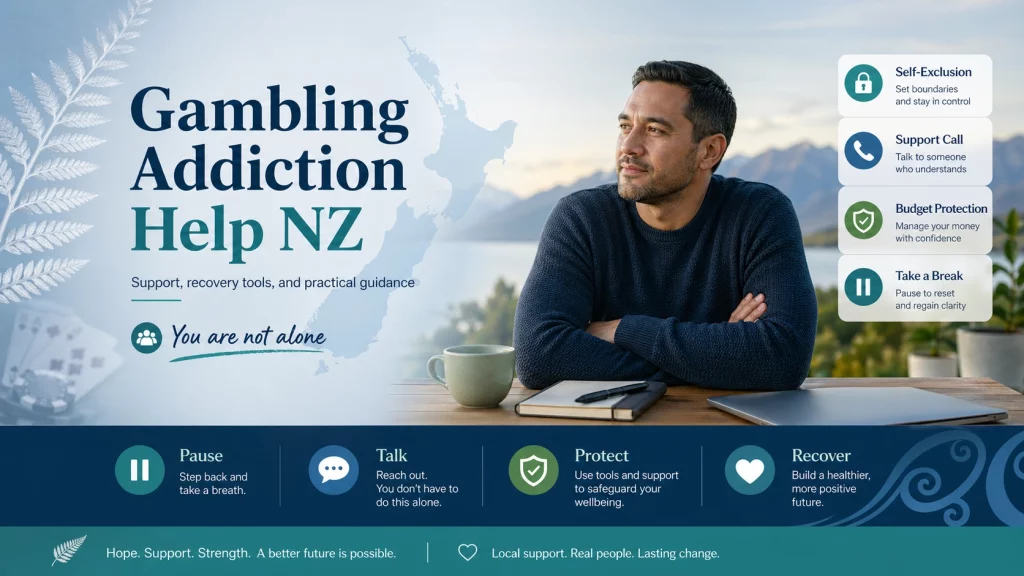
A useful way to understand the issue is to look at behaviour rather than labels. If gambling creates secrecy, pressure, repeated financial stress, or emotional distress, help is relevant. A person does not need to wait until the situation becomes severe. Early help is easier, quieter, and more effective than waiting for a larger crisis.
When someone reaches the Login page of a gambling account and already feels tension, urgency, shame, or pressure, that is a warning signal. The decision should not be “which game should I open?” The better decision is “do I need to step away and use support instead?”
First Signs That Help May Be Needed
The first signs of gambling addiction are often small and easy to explain away. A person may tell themselves they are only having a bad week, only trying to recover one loss, or only using spare time. Over time, the pattern becomes clearer. Gambling starts taking more money, more time, and more emotional space than planned.
Chasing losses is one of the strongest warning signs. This means gambling more because money has already been lost. Chasing often feels logical in the moment, but it usually increases harm. A person may start with a fixed budget, lose it, and then deposit again because stopping feels painful. The second deposit is no longer entertainment. It is recovery pressure.
Another sign is secrecy. If someone deletes messages, hides bank transactions, avoids talking about gambling, or becomes defensive when asked simple questions, the issue may already be affecting trust. Secrecy does not always mean the person wants to deceive others. Often, it means they feel ashamed or afraid of being confronted.
A third warning sign is broken limits. A person may set rules such as “only once this week” or “only this amount,” then repeatedly break them. The important detail is repetition. One mistake can happen. A repeated pattern shows that the current self-control method is not strong enough and external support may be needed.
| NZ Help Resource | Type of Support | How It Can Help |
| Gambling Helpline NZ | Free national phone and text support | Provides immediate support, information and referral for gambling problems |
| Problem Gambling Foundation NZ | Free and confidential counselling and advice | Supports people affected by their own gambling or someone else’s gambling |
| Ministry of Health Gambling Harm | Public health information | Explains gambling harm as a health and wellbeing issue in New Zealand |
| Department of Internal Affairs Harm Minimisation | Regulatory and harm-minimisation information | Explains how New Zealand gambling rules address harm minimisation |
| Safer Gambling NZ Services Near You | Local gambling harm support directory | Helps people find support services for themselves, whānau or friends |
Why Early Action Matters
Gambling harm usually becomes harder to manage when it is hidden. A person may try to solve the problem by winning money back, setting private rules, switching games, avoiding certain sites, or promising to stop later. These attempts can help temporarily, but if the behaviour keeps returning, stronger action is needed.
Early action reduces damage. It can protect money before debt increases. It can protect relationships before trust breaks further. It can protect sleep, work, study, and personal wellbeing before gambling becomes the centre of daily stress.
Early help also gives the person more options. They may be able to set strong account limits, request time-out or self-exclusion, block gambling websites, remove saved payment methods, unsubscribe from marketing, and speak with a counsellor before the situation escalates.
The Sign up stage is also important for prevention. If someone is creating new gambling accounts after trying to stop, that behaviour should be taken seriously. Opening another account can be a way to bypass previous limits or exclusions. In that case, the safest step is not to continue registration. It is to stop and contact support.
Common Gambling Harm Patterns
Gambling addiction often follows recognisable patterns. One person may chase losses. Another may gamble in secret. Another may use gambling to escape stress. Another may gamble heavily only after drinking or late at night. The pattern matters because the support plan should respond to the actual trigger.
For example, if the trigger is payday, the person may need financial barriers before payday arrives. If the trigger is boredom at night, they may need website blocking, app removal, and a non-gambling routine. If the trigger is promotional messages, they may need to unsubscribe from marketing and request account restrictions. If the trigger is stress, counselling or emotional support may be more useful than another budgeting rule.
The key point is that gambling addiction help should not be vague. A useful plan identifies what happens before gambling, what happens during gambling, and what happens after gambling. Then it places barriers at the points where control usually breaks.
What to Do First
The first step is to stop the immediate gambling opportunity. This can mean closing the site, removing the app, logging out, blocking the website, or asking the casino to apply a time-out or self-exclusion. If money is still available in the gambling account, the person should avoid using it to continue play.
The second step is to protect payment access. Saved cards, instant payment methods, and easy mobile deposits can make relapse more likely. Removing saved payment details, lowering spending limits, or asking a trusted person to help manage access can create useful friction.
The third step is to talk to someone. This can be a professional support service, a trusted friend, a family member, a counsellor, or a community support worker. The conversation does not need to be perfect. A simple sentence is enough: “I am struggling with gambling and I need help stopping.”
The fourth step is to write down the pattern. When does gambling usually happen? What triggers it? How much money is usually involved? What feelings come before and after? This information helps turn a confusing problem into a practical plan.
Building a Practical Stop-Gambling Plan in NZ
A stop-gambling plan should be specific. General promises such as “I will be more careful” or “I will only play less” are usually too weak when gambling has already become difficult to control. A practical plan needs barriers, support, financial protection, replacement routines, and clear rules for what happens when an urge appears.
The goal is not to become stronger in the moment of temptation. The goal is to make gambling harder to access before that moment arrives. Gambling addiction often works through speed and availability. If deposits are instant, sites are easy to open, promotional messages arrive often, and the person is alone with stress, the risk is higher. A good plan slows everything down.
Step One: Reduce Access Immediately
The first practical step is access reduction. This may include closing gambling tabs, deleting saved bookmarks, uninstalling gambling apps, logging out of accounts, disabling promotional emails, and using blocking tools. The point is to interrupt automatic behaviour. If a person normally gambles from the same device at the same time of day, that routine must be broken.
If gambling happens through a mobile App, removal matters. A gambling app can create constant availability because it sits beside ordinary daily tools. A person may open it without planning to gamble, then continue because access is too easy. Removing the app does not solve the whole problem, but it creates one more barrier between the urge and the behaviour.
Website blocking can also help. Some people use blocking software, device restrictions, browser controls, or banking tools that limit gambling transactions. These barriers are most effective when combined. One weak barrier can be bypassed quickly. Several barriers create time for the urge to pass or for the person to contact support.
The person should also reduce gambling reminders. Promotional emails, push notifications, text offers, and social media ads can all trigger relapse. If possible, unsubscribe, block senders, disable notifications, and ask gambling operators to remove the account from marketing lists.
Step Two: Use Time-Out and Self-Exclusion
Time-out and self-exclusion are different tools. A time-out is usually temporary. It can be useful when someone needs a short break after a risky period. Self-exclusion is stronger and is more suitable when gambling has become difficult to control or repeated stopping attempts have failed.
Self-exclusion should not be seen as extreme. It is a protective barrier. If a person keeps returning to gambling after deciding to stop, self-exclusion can remove the repeated decision point. The fewer decisions the person must make under pressure, the better.
When requesting self-exclusion, the message should be direct. The person should not leave room for negotiation. A clear request could be: “I am experiencing gambling harm. Please self-exclude my account and remove me from all promotional communication.” This wording tells the operator that the request is serious and connected to harm prevention.
The person should save confirmation emails or screenshots after making the request. Records matter because they show when the account restriction was requested and what the operator confirmed.
| Action | Purpose | How to Apply It | Why It Helps |
| Remove gambling apps | Reduce instant access | Delete apps from phone and disable app-store shortcuts where possible | Interrupts automatic gambling behaviour |
| Block websites | Create digital barriers | Use device controls, browser tools or blocking software | Adds friction when urges appear |
| Use self-exclusion | Stop account access | Request exclusion from gambling operators or relevant services | Removes repeated decisions during high-risk moments |
| Cancel marketing | Reduce triggers | Unsubscribe from emails, texts and push notifications | Limits reminders that can lead to relapse |
| Protect payments | Reduce deposit ability | Remove saved cards, lower limits, use bank controls where available | Makes impulsive gambling harder |
Step Three: Protect Money Before the Next Urge
Financial protection is essential. Many gambling relapses happen because money is available at the wrong moment. The person may not intend to gamble earlier in the day, but later, after stress or boredom, easy payment access changes the outcome.
A practical plan should separate essential money from accessible spending money. Bills, rent, food, transport, debt payments and family obligations should be protected first. Some people benefit from moving essential funds into accounts that are harder to access impulsively. Others may ask a trusted person to help manage temporary financial safeguards.
If debt already exists, the person should avoid gambling as a recovery strategy. Trying to gamble out of debt usually increases harm. A safer response is to speak with a budgeting or financial support service and create a repayment plan that does not rely on uncertain outcomes.
Payment-method friction is useful. Removing stored card details, disabling one-click payments, reducing online spending limits, or contacting a bank about gambling transaction controls can help. The goal is not embarrassment or punishment. The goal is to make a harmful action slower and less automatic.
Step Four: Replace the Gambling Routine
Stopping gambling leaves a gap. That gap may be time, emotion, excitement, distraction, social contact or routine. If the gap is not filled, the urge to return may remain strong. A stop-gambling plan should include replacement activities that are available during high-risk periods.
Replacement activities should be easy, immediate and non-financially risky. Walking, calling someone, going to the gym, cooking, gaming without betting, reading, cleaning, studying, watching a planned show, or attending a support appointment can all work. The best replacement depends on the person’s trigger.
If gambling usually happens late at night, the replacement should be part of an evening routine. If gambling happens after payday, the replacement should happen on payday. If gambling happens after conflict or stress, the replacement should help regulate emotion before the urge becomes strong.
The person should not rely on one replacement activity only. A small list is better because urges do not always feel the same. Sometimes the person needs movement. Sometimes they need conversation. Sometimes they need distraction. Sometimes they need rest.
Step Five: Identify Triggers
Triggers are situations, emotions or cues that increase the urge to gamble. Common triggers include payday, boredom, alcohol, stress, loneliness, sport events, late-night phone use, debt pressure, promotional messages, and previous wins. A person cannot manage triggers well until they name them clearly.
One useful method is to write a short trigger log. After an urge appears, write down the time, place, emotion, device used, amount of money available, and what happened just before the urge. After one or two weeks, patterns often become visible.
A trigger log should not be used to judge the person. It is information. If the same trigger appears repeatedly, the plan should target that point. For example, if payday is a trigger, money barriers should be active before payday. If alcohol is a trigger, gambling access should be blocked before drinking. If boredom is a trigger, scheduled replacement activities should be ready before the usual gambling window.
Step Six: Avoid Bonus-Based Relapse
Promotions can be a relapse trigger. A Bonus offer may look like reduced risk, but it can pull a person back into gambling by creating urgency or perceived value. Free spins, deposit matches, cashback offers and loyalty rewards can all make stopping feel harder.
A person seeking gambling addiction help should treat promotions as triggers, not opportunities. The safest rule is to avoid promotional gambling completely while trying to stop. If a message says the offer expires soon, that urgency is part of the risk. The correct response is not to act quickly. It is to delete the message and use the support plan.
Bonus terms can also create extended gambling. Wagering requirements may require repeated play before withdrawal is possible. This can keep a person inside the gambling environment longer than intended. For someone experiencing harm, that is unsafe.
Step Seven: Review Game-Specific Risk
Different gambling products create different risk patterns. The Slots category can be risky because spins are fast, outcomes are frequent, and features such as near-misses, bonus rounds and volatility can encourage extended play. Even small stakes can add up quickly when the pace is high.
Live casino games may create a different type of pressure because the format feels social and continuous. Sports betting may create event-based triggers, especially around favourite teams or live matches. Instant games can compress decision time and encourage repeated attempts.
A stop-gambling plan should account for the person’s specific gambling type. Someone who mainly plays slots may need app and website blocks. Someone who bets on sports may need to avoid sports-betting content, odds pages and live-bet discussions. Someone who uses multiple gambling products may need broader blocking and financial controls.
Step Eight: Prepare for Urges
Urges usually rise, peak and fall. They can feel urgent, but they do not last at the same intensity forever. The person should prepare a short urge plan before the urge appears. The plan might include closing the device, moving to another room, calling someone, using a support chat, taking a walk, or reading a written reminder of why they are stopping.
A useful rule is to delay by 20 minutes. During that time, the person should not negotiate with the urge. They should do a replacement activity. If the urge remains, contact support or another person. The goal is to avoid acting in the first wave of pressure.
Written reminders can help. A person can write a note such as: “If I gamble now, I will feel worse later. I am protecting my money and my peace. I will wait and call someone.” The words should be personal and direct.
Family, Whānau Support and Talking About Gambling Harm
Gambling addiction rarely affects only one person. In New Zealand, gambling harm can affect whānau, partners, children, friends, flatmates, employers and wider communities. The Ministry of Health describes gambling harm as a social, economic and health issue that can negatively affect individuals, whānau and communities, and notes that some groups are disproportionately affected.
For this reason, gambling addiction help should not be written only for the person gambling. It should also speak to people who are worried about someone else. A partner may notice missing money. A parent may notice secrecy around devices. A friend may notice mood changes after betting. A workmate may notice distraction, stress or unexplained absences. These signs matter because gambling harm often becomes visible through behaviour before the person is ready to describe it honestly.
How Gambling Harm Shows Up at Home
Inside a household, gambling harm often appears as tension before it appears as a clear admission. There may be arguments about money, unexplained transactions, defensive reactions, hidden phone use, sudden borrowing, unpaid bills, or emotional withdrawal. Sometimes the person gambling becomes irritable after losses or unusually hopeful after wins. This emotional swing can affect everyone around them.
Financial pressure is usually the most visible part, but it is not the only harm. Trust can be damaged when gambling is hidden. Children or younger family members may notice stress even if they do not understand the reason. Partners may feel they have to monitor accounts or ask difficult questions. Parents may feel responsible for fixing the problem. These dynamics can become exhausting.
The safest approach is to treat gambling harm as a support issue, not only as a discipline issue. Anger may be understandable, especially if money has been lost, but shame and confrontation can push the person deeper into secrecy. A direct but calm conversation is usually more useful.
A helpful first sentence might be: “I am worried because I have noticed changes, and I want us to get support.” This frames the issue around observable behaviour and help, not accusation.
| What Whānau May Notice | Possible Meaning | Helpful Response | What to Avoid |
| Hidden phone or laptop use | The person may be gambling privately or checking accounts | Ask calmly about changed behaviour and suggest support | Public confrontation or humiliation |
| Repeated borrowing | Money may be used to cover losses or continue gambling | Set financial boundaries and encourage professional help | Giving repeated cash without a support plan |
| Unpaid bills or missing savings | Essential money may be at risk | Protect household funds and seek financial advice | Ignoring the issue to avoid conflict |
| Mood swings after online activity | Losses or gambling stress may be affecting emotions | Choose a quiet time to talk, not during an argument | Assuming the person can “just stop” immediately |
| Promises to stop but repeated return | Self-control alone may not be enough | Use exclusion tools, blocking methods and counselling support | Relying only on verbal promises |
How to Start the Conversation
A conversation about gambling harm should be specific and calm. Instead of saying “You are ruining everything,” it is better to describe what has changed: “I noticed several late-night sessions,” “I saw repeated withdrawals,” or “You seemed very stressed after using your phone.” Specific observations are harder to dismiss than general accusations.
The person may deny the problem. That does not mean the conversation has failed. Denial is common when shame, fear or financial pressure is involved. The first conversation may only plant the idea that support is available. It may take several conversations before the person is ready to act.
It is useful to offer practical next steps rather than only emotional pressure. These steps may include contacting a gambling support service, setting self-exclusion, blocking access, removing promotional messages, reviewing finances together, or speaking to a counsellor. Safer Gambling NZ states that support is available for people who gamble and for whānau and friends affected by someone else’s gambling, with free and confidential services listed by area.
If the person agrees to seek help, keep the next step small and immediate. A long plan can feel overwhelming. A first step could be making one call, sending one text, booking one counselling session, or writing one self-exclusion request.
Support for Partners, Parents and Friends
People affected by someone else’s gambling also need support. They may feel confused, angry, guilty, embarrassed or financially unsafe. They may wonder whether they should pay debts, monitor accounts, remove access to money, or give another chance. These are difficult decisions, and support services can help them think clearly.
The Problem Gambling Foundation provides free and confidential support for anyone affected by gambling, including people affected by another person’s gambling. This is important because family members often wait until the person gambling agrees to get help. They do not need to wait. They can ask for guidance themselves.
A support service can help whānau set boundaries. Boundaries might include not lending money, protecting shared accounts, refusing to cover gambling-related debts without a plan, and requiring professional support before financial trust is rebuilt. Boundaries should be firm but not cruel. The purpose is to stop harm from spreading.
Financial boundaries are especially important. Repeatedly giving money to someone who is gambling can unintentionally keep the cycle active. Support may need to shift from “I will cover this loss” to “I will help you contact support and protect essential needs.”
Handling Relapse Without Shame Cycles
Relapse can happen. A person may stop gambling for a period and then return after stress, payday, emotional pressure, alcohol, loneliness, or a promotional trigger. Relapse should be taken seriously, but it should not become a shame spiral. Shame can make gambling worse because the person may hide the relapse and continue alone.
The better response is review and adjustment. What happened before the relapse? Was access still too easy? Were payment controls weak? Were promotional messages still arriving? Was the person isolated? Was there a specific emotional trigger? The plan should then be strengthened at that point.
A relapse does not mean support has failed. It means the current barriers were not enough. Stronger barriers may include longer self-exclusion, wider blocking tools, stricter financial controls, more frequent counselling, or greater family involvement.
The person should be encouraged to return to support immediately after relapse rather than waiting until the damage grows. Gambling Helpline NZ describes itself as a national freephone support service for people affected by gambling in Aotearoa, available 24 hours, and offering immediate support, referral and information.
Protecting Young People and Vulnerable Household Members
Gambling harm can affect younger people even when they are not gambling themselves. They may experience household stress, financial disruption, emotional tension or exposure to gambling as normal behaviour. Adults should avoid discussing gambling as a money-making method around young people, and they should avoid leaving gambling accounts open on shared devices.
Households should also keep payment information secure. Shared devices, saved cards and open accounts increase risk. If gambling harm is present, the family may need to review passwords, banking access, device settings and promotional messages visible to others.
Young people may also be exposed to gambling-like mechanics in games, streaming content or social media. Families should be careful about normalising gambling language, especially ideas such as “easy money,” “sure win,” or “just one more try.” These ideas can shape risk perception.
The healthiest family message is simple: gambling is not a way to make money, and help is available when gambling causes harm.
Communication With Gambling Operators
When a person wants to stop, communication with gambling operators should be clear and recorded. The message should not ask for advice on playing less. It should request a specific protection action.
A strong message could say: “I am experiencing gambling harm. Please close my account, apply self-exclusion, and remove me from all marketing.” This request should be sent through official support channels and saved. Screenshots, email confirmations and chat transcripts can help if follow-up is needed.
If whānau members are helping, they should understand that operators may not discuss account details with them because of privacy rules. However, family members can still encourage the person to send the request, sit with them while they do it, or contact support services for guidance.
Recovery Checklist and Long-Term Gambling Harm Support in NZ
Long-term recovery from gambling harm is not built on one decision. It is built on repeated protective actions. A person may decide to stop, but the environment around them still matters: devices, payment access, stress patterns, social pressure, promotional contact, and emotional triggers can all pull them back toward gambling. A recovery plan should therefore reduce access, protect money, increase support, and create safer routines.
For New Zealand players, gambling addiction help should be practical, calm, and ongoing. The goal is not only to stop gambling for one day. The goal is to make gambling less available, less automatic, and less connected to stress or financial pressure. This takes structure. It also takes patience. Recovery can improve gradually, especially when the person does not try to manage everything alone.
Recovery Checklist for the First Week
The first week is important because urges may still be frequent and access may still be easy. During this period, the person should not rely on motivation alone. Motivation changes quickly. Barriers are more reliable.
The first step is to remove direct gambling access. Delete apps, close tabs, block websites, unsubscribe from promotional messages, and request account exclusion where possible. If there are several gambling accounts, every account should be addressed. Leaving one account open can become the pathway back.
The second step is money protection. Essential funds should be separated from impulsive access. Saved cards should be removed from gambling sites. Banking limits or transaction controls should be used where available. If debt exists, gambling should not be treated as a repayment method. A realistic financial plan is safer than another attempt to win back money.
The third step is support contact. The person should speak with a gambling-harm support service, counsellor, trusted friend, family member, or whānau support person. A private decision to stop is useful, but a supported plan is stronger.
| Recovery Step | Action to Take | Purpose | Best Time to Do It |
| Remove access | Delete apps, block sites, close gambling tabs | Reduces instant return to gambling | Immediately |
| Self-exclude | Request account closure or self-exclusion from operators | Creates a stronger barrier than willpower alone | First 24 hours |
| Stop marketing | Unsubscribe from texts, emails and notifications | Removes promotional triggers | First 24–48 hours |
| Protect money | Remove saved cards, lower limits, separate essential funds | Reduces impulsive deposit ability | First week |
| Tell someone safe | Speak to a trusted person or support service | Reduces secrecy and builds accountability | As soon as possible |
| Plan replacement routines | Prepare non-gambling activities for high-risk times | Fills the time and emotional gap gambling used to occupy | First week and ongoing |
Managing Urges Without Returning to Gambling
Urges can feel urgent, but they usually change if the person does not act immediately. The safest method is to delay, move, and contact. Delay means waiting before taking any gambling-related action. Move means changing physical location, closing the device, going outside, or starting another activity. Contact means speaking to someone or using a support channel.
An urge plan should be written before the urge appears. In the moment, it can be hard to think clearly. A written plan may include three short steps: close the device, leave the room, message someone. The simpler the plan, the more likely it is to work.
Some urges are connected to emotion. Stress, shame, anger, loneliness or boredom can create pressure to gamble. In those moments, the person may not actually want gambling; they may want relief. The replacement activity should match the emotional need. If the person is restless, movement may help. If they feel isolated, a call may help. If they feel overwhelmed, a quiet task or breathing exercise may help.
The person should also avoid testing themselves. Opening a gambling site “just to check” is risky. Reading offers, checking balances, watching gambling streams, or visiting forums can restart the cycle. Recovery is easier when gambling cues are reduced, not inspected.
Rebuilding Financial Stability
Financial recovery may take time, especially if gambling has caused debt or missed payments. The safest approach is direct and structured. List essential expenses first. List debts honestly. Stop new gambling transactions. Contact creditors if needed. Seek budgeting support where available.
The person should not try to repair gambling losses through gambling. That creates the same cycle again. A repayment plan may feel slower, but it is safer because it does not depend on uncertain outcomes.
Whānau or partners may want to help financially. This should be handled carefully. Paying debts without a wider support plan can unintentionally leave the gambling pattern untouched. Financial help should be linked to practical safeguards, such as counselling contact, self-exclusion, banking controls, or shared budgeting.
Rebuilding trust also takes time. A person affected by gambling harm may want forgiveness quickly, but trust usually returns through consistent behaviour. Transparency, records, support attendance, and financial honesty matter more than promises.
Changing the Digital Environment
Online gambling harm is strongly connected to the digital environment. Devices create access. Notifications create triggers. Saved payment details create speed. Social media can show gambling content. Search history and ads can keep gambling visible. Recovery should therefore include digital clean-up.
The person should remove gambling bookmarks, clear saved passwords where appropriate, block gambling sites, disable gambling app downloads if possible, and unsubscribe from promotional content. Email filters can move gambling messages away from the inbox. Social media settings can reduce gambling-related ads or content recommendations.
Search behaviour also matters. Looking up gambling strategies, casino reviews, bonus codes, or “best games to win” can keep the person mentally connected to gambling. During recovery, the safer approach is to search for support, counselling, budgeting help, blocking tools, and recovery stories instead.
If the person previously used Links pages or mirror-style access pages to reach gambling sites, those should be avoided completely. Access workarounds are especially risky because they can bypass the barriers that recovery depends on.
Why Game Choice Is Not the Solution
A common mistake is believing the harm will stop if the person changes the type of gambling. They may say they will stop slots but only play table games, stop sports betting but only play casino games, or stop online gambling but only gamble in venues. This is rarely enough if the core issue is loss of control.
The problem is not only the product. It is the pattern: urges, deposits, secrecy, chasing, emotional pressure, and broken limits. Changing the product may only move the behaviour into another form.
That does not mean all gambling products carry identical risk. Fast games and high-frequency products can be especially risky. But for someone seeking gambling addiction help, the safest focus is stopping harmful gambling behaviour, not finding a lower-risk substitute.
Recovery should not be built around a “controlled return” unless professional support has been involved and the person has strong stability. For many people experiencing addiction-level gambling harm, abstinence from gambling is safer than moderation attempts.
Using Support Over Time
Support should not end after the first good week. Gambling harm can return after stress, payday, conflict, boredom, alcohol use, loneliness, or unexpected money pressure. Ongoing support helps the person prepare for these moments before they arrive.
Support can include counselling, helplines, peer groups, family support, financial advice, cultural support, and regular check-ins with a trusted person. The right mix depends on the person’s situation. Some people need practical financial guidance. Others need emotional support. Others need help rebuilding family trust.
A useful monthly check-in can ask: Have I gambled? Have I had urges? What triggered them? Did my barriers work? Do I need stronger blocks? Is my money safer than last month? Have I been honest with my support person? These questions keep the plan active.
The person should also mark progress without becoming overconfident. A month without gambling is meaningful. Three months is meaningful. But confidence should not lead to reopening accounts, checking offers, or testing control. Progress is protected by maintaining barriers.
Final Guidance for Gambling Addiction Help in NZ
Gambling addiction help in New Zealand starts with one practical decision: stop trying to solve gambling harm through more gambling. From there, the person needs access barriers, money protection, support contact, and a plan for urges. The process does not need to be perfect, but it does need to be active.
If gambling has caused secrecy, debt, stress, broken promises, relationship conflict, or repeated loss of control, help is appropriate now. Waiting usually gives the pattern more time to grow. Early action can protect money, health, trust, and daily stability.
The strongest recovery plan is direct. Remove access. Self-exclude. Stop marketing. Protect essential money. Tell someone safe. Contact support. Replace gambling routines. Review triggers. Strengthen barriers after any relapse. Do not treat relapse as proof of failure; treat it as information that the plan needs more protection.
Gambling addiction is manageable with support and structure. A person does not need to face it alone, and whānau do not need to carry the whole problem without guidance. In New Zealand, help pathways exist for the person gambling and for those affected by someone else’s gambling. The safest next step is the one that reduces gambling access today and connects the person with real support before the next urge arrives.






Comments