
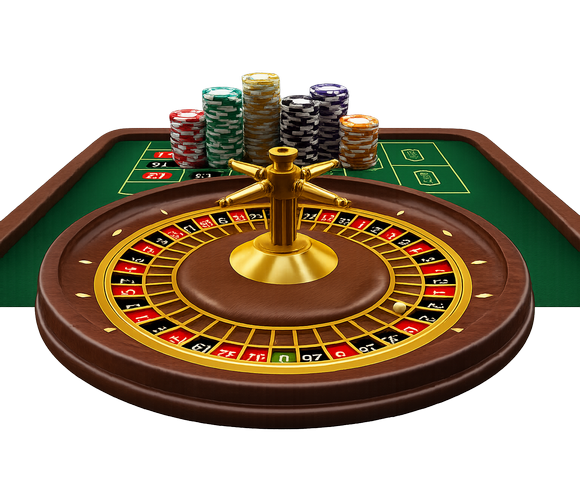
Roulette Structure, Table Variants, and Core Mechanics
Roulette is one of the few casino games where the mechanical structure has remained stable for centuries while the surrounding interface continues to evolve. Whether played in a land-based setting or through modern digital platforms, the foundational mechanics do not change: a wheel, a ball, a numbered layout, and fixed payout ratios. What does change is how players interpret probability, pace sessions, and integrate roulette into their broader account activity.
When I first approached roulette online, the shift from physical observation to digital interface altered the experience significantly. The tactile rhythm of a spinning wheel is replaced with interface timers, animated physics, and structured betting windows. Yet structurally, nothing about the probability model is modified.
Before engaging in roulette sessions, I typically review my account status after Login. This matters more than most players assume. Roulette’s simplicity can mask how quickly balance fluctuations accumulate over consecutive rounds. Establishing session boundaries before placing the first bet reduces reactive decisions later.
Roulette also differs from many other Casino Kingdom`s Games because it does not rely on feature layers, bonus triggers, or progressive systems. Each spin is independent. This independence is mathematically absolute. There is no memory in the wheel, no pattern retention, and no adjustment based on past outcomes.

European vs American Roulette: Structural Differences
The first structural distinction that influences long-term experience is wheel type.
European roulette contains 37 pockets (numbers 1–36 plus a single zero).
American roulette contains 38 pockets (1–36 plus zero and double zero).
That single additional pocket significantly shifts the house edge.
Here is a comparative structural overview:
European vs American Roulette Core Parameters
| Wheel Type | Total Pockets | Zero Pockets | House Edge | Typical RTP |
|---|---|---|---|---|
| European | 37 | 1 (0) | 2.70% | 97.30% |
| American | 38 | 2 (0, 00) | 5.26% | 94.74% |
| French (La Partage) | 37 | 1 (0) | 1.35% (even bets) | ~98.65% (conditional) |
The presence of a second zero nearly doubles the mathematical advantage in American roulette. Over isolated spins, this difference is invisible. Over extended sessions, it compounds.
When choosing roulette versions online, I treat this as a structural decision rather than a stylistic preference.
Betting Categories and Risk Profiles
Roulette bets are divided into inside bets and outside bets.
Inside bets include:
- Straight number
- Split
- Street
- Corner
- Six-line
Outside bets include:
- Red/Black
- Odd/Even
- High/Low
- Dozens
- Columns
Inside bets carry higher payouts but lower probability. Outside bets offer lower payouts but higher hit frequency.
From a systems perspective, roulette does not reward mixing bet types randomly. Each category has fixed odds and payouts. The perception of “safer” or “riskier” arises from hit frequency, not mathematical advantage.
Below is an illustrative distribution of win probability across common bet types (European wheel):
Approximate Win Probability by Bet Type (European)
| Bet Type | Numbers Covered | Win Probability | Payout |
|---|---|---|---|
| Straight | 1 | 2.7% | 35:1 |
| Split | 2 | 5.4% | 17:1 |
| Street | 3 | 8.1% | 11:1 |
| Corner | 4 | 10.8% | 8:1 |
| Red/Black | 18 | 48.6% | 1:1 |
| Odd/Even | 18 | 48.6% | 1:1 |
| Dozen | 12 | 32.4% | 2:1 |
These probabilities remain constant regardless of streaks or visual patterns.
Probability Spread of Common Bet Types
Below is an illustrative visualization of how probability distributes across selected bet categories.
This chart clarifies a key psychological dynamic: higher payout bets occur less frequently. The inverse relationship between frequency and payout defines roulette’s rhythm.
Session Flow and Timing
Online roulette sessions follow a structured loop:
- Betting window opens
- Bets are locked
- Wheel spins
- Outcome is displayed
- New betting window begins
In live dealer formats, the pace is slower and more human-paced. In automated formats, spins occur faster, often within 20–30 seconds per round.
Faster rounds do not alter probability, but they do increase exposure. More spins per hour means more iterations of the house edge.
One element I monitor carefully is cumulative exposure rather than individual spin results. Roulette outcomes are discrete; session outcomes are cumulative.
Cognitive Patterns in Early Play
When I began tracking roulette behavior over multiple sessions, three patterns emerged:
- Overreaction to streaks
- Increased stake adjustments after short-term losses
- Emotional bias toward recent outcomes
These behaviors do not alter the game’s mathematics, but they alter session results.
Roulette does not contain volatility tiers like slots, nor multiplier escalation like crash games. Its risk is linear and constant. The only variability comes from bet selection and stake sizing.
Understanding this distinction is critical. Many players misinterpret streaks as predictive signals. In reality, each spin is statistically independent.
Integration Within Platform Ecosystem
Roulette occupies a unique place within an online platform. It sits between rapid digital games and slower table formats. It also differs from feature-heavy products like Slots, where layered mechanics influence player perception.
Because roulette lacks secondary triggers, it can serve as a stabilizing game within a session. Alternatively, it can amplify loss speed if used without structured limits.
The simplicity of roulette is both its strength and its risk. It offers transparency, but it does not provide natural stopping cues.
Progression Systems, Player Psychology, and Structural Illusions
Once the structural basics of roulette are understood, the next layer of analysis shifts to behavior. Roulette itself does not evolve across sessions. What evolves is how players attempt to manage risk inside a mathematically fixed environment.
The most common behavioral layer added to roulette is a progression system. These systems do not alter probability, but they reshape stake distribution across spins. The appeal is understandable: if outcomes are independent, then perhaps stake scaling can smooth variance. In practice, progression systems redistribute volatility rather than eliminate it.
Before testing any progression, I always reassess my balance and session objective immediately after Login. Roulette amplifies cumulative exposure quietly, especially when automated spins are enabled. Having clarity before entering the table matters more than the specific bet pattern chosen.
The Martingale and Its Variants
The Martingale strategy is the most widely known progression model. It involves doubling the stake after every loss and resetting to the base stake after a win.
The logic appears simple:
- Bet on Red
- If Red loses, double the stake
- Continue until Red wins
Because even-money bets have a near 50% probability (48.6% in European roulette), players assume that losing streaks will eventually end before bankroll limits are reached.
The flaw lies in exponential stake growth. A sequence of seven consecutive losses multiplies the original stake by 128. Table limits and bankroll constraints create hard ceilings that the progression cannot overcome.
Here is a structured comparison of common roulette progression systems:
Roulette Progression Systems Overview
| System | Core Principle | Stake Movement | Risk Characteristic | Long-Term Effect |
|---|---|---|---|---|
| Martingale | Double after loss | Exponential | Rapid escalation | Bankroll collapse at streak peak |
| Reverse Martingale | Double after win | Exponential (wins only) | Profit concentration | Gains erased during loss clusters |
| Fibonacci | Add previous two bets | Incremental | Slower escalation | Still exposed to long streaks |
| Flat Betting | Fixed stake | None | Stable | Predictable variance |
| D’Alembert | Add 1 unit after loss | Linear | Moderate | Slower exposure, same edge |
All progression systems share one constant: they do not change the house edge.
Why Streaks Feel Meaningful
One of roulette’s strongest psychological traps is the streak illusion. Seeing five consecutive black results creates a sense of imbalance. Players often believe red is “due.”
From a statistical standpoint, this is incorrect. Each spin remains independent. The probability of red on the next spin is unchanged.
Yet visual clustering is powerful. Digital interfaces amplify this through history boards and color tracking. What should be neutral data becomes narrative fuel.
When alternating between roulette and other Games, I noticed that roulette’s streaks feel more deterministic than slot streaks. This is because outcomes are binary and easily categorized.
Stake Escalation and Emotional Drift
In practice, most players do not follow a strict progression system for long. Emotional drift interferes.
Emotional drift includes:
- Increasing stakes after boredom
- Increasing stakes after a near-win
- Increasing stakes after two small wins
- Increasing stakes after several small losses
Roulette’s simplicity makes stake changes frictionless. There are no bonus triggers or animations to slow adjustment. The interface supports immediate modification.
Over long sessions, this flexibility becomes a liability.
Risk Distribution Across Bet Categories
While many discussions focus on even-money bets, inside bets introduce different volatility dynamics. A straight number bet wins infrequently but pays 35:1. This creates high-impact, low-frequency variance.
Players often mix inside and outside bets simultaneously, believing this balances risk. In reality, it increases complexity and can obscure actual exposure.
Below is a simplified distribution model of how typical player bets cluster across categories (illustrative, not statistical):
Typical Bet Distribution in Mixed Roulette Sessions
This chart illustrates how most exposure remains concentrated in even-money bets, even when players experiment with inside numbers.
Why Roulette Feels “Safer” Than It Is
Roulette’s transparent mechanics create an illusion of fairness. There are no hidden multipliers, no animated bonus features, no sudden volatility spikes. The wheel spins, the ball lands.
This predictability of format makes it feel safer than high-volatility formats like Slots, even though cumulative house edge exposure can be similar over time.
Roulette does not generate dramatic swings quickly, but it erodes balance steadily if session length expands.
Table Limits and Structural Boundaries
Every roulette table operates within minimum and maximum stake limits. These limits exist to manage exposure both for the operator and the player.
For progression systems, table limits are decisive. They define the ceiling beyond which doubling strategies fail.
Stake Growth in Martingale
| Loss Count | Base Stake (1 unit) | Required Stake |
|---|---|---|
| 1 | 1 | 2 |
| 2 | 1 | 4 |
| 3 | 1 | 8 |
| 4 | 1 | 16 |
| 5 | 1 | 32 |
| 6 | 1 | 64 |
| 7 | 1 | 128 |
In only seven losses, the stake increases 128x. Many online tables cap well below this multiplier.
This table clarifies why progression systems collapse under structural constraints rather than probability shifts.
Responsible Framing of Roulette Sessions
Roulette works best when treated as a bounded activity rather than a performance challenge.
I define:
- Maximum number of spins
- Maximum stake increase
- Exit conditions unrelated to streaks
This framing prevents reactive escalation.
Unlike crash games or feature-based formats, roulette does not push players through visible triggers. It relies entirely on voluntary continuation.
Wheel Bias Myths, Live vs Auto Tables, and Long-Session Illusions
After the mechanics and progression systems are understood, the next layer of roulette analysis shifts toward misconceptions. Most misunderstandings in roulette are not mathematical — they are interpretive. Players often assign meaning to structural elements that do not support it.
In extended sessions, three persistent narratives tend to emerge:
- The wheel has a bias.
- Live dealer tables behave differently than automated ones.
- Certain sequences signal temporary “imbalance.”
None of these claims hold up under probabilistic scrutiny, yet all three influence player behavior significantly.
The Myth of Wheel Bias in Online Roulette
In land-based casinos, historical wheel bias was theoretically possible due to physical imperfections. Over time, slight mechanical deviations could influence ball drop tendencies.
In modern online roulette, this variable does not exist in the same form. Automated roulette uses certified random number generators. Live dealer roulette uses calibrated wheels monitored under strict compliance frameworks.
When players claim a digital wheel favors certain numbers, they are reacting to short-term clustering. Because roulette numbers are discrete and limited (37 in European, 38 in American), clustering is inevitable over finite samples.
From a probability perspective, randomness does not guarantee even distribution over short runs. It guarantees convergence over very large ones.
Live Dealer vs Automated Roulette
There is a persistent belief that live dealer roulette feels “fairer” than automated tables. The perception often stems from visible mechanics: watching a physical ball roll across a wheel creates psychological trust.
Structurally, however, both formats operate under strict certification standards. The difference lies in pacing and atmosphere, not mathematics.
Here is a comparative breakdown:
Live Dealer vs Automated Roulette
| Feature | Live Dealer | Automated Table | Impact on Player |
|---|---|---|---|
| Wheel Mechanism | Physical wheel | RNG-based | Equivalent randomness (certified) |
| Pace | Slower | Faster | Exposure speed differs |
| Interaction | Human dealer | Interface-driven | Psychological trust varies |
| Table Limits | Often higher | Flexible ranges | Affects bankroll planning |
| Session Feel | Social | Isolated | Influences duration |
The primary variable here is pace. Faster automated tables increase spins per hour. More spins mean more iterations of house edge exposure.
When transitioning from other Games, players sometimes underestimate this acceleration. A slower-feeling live environment may reduce decision fatigue compared to automated loops.
The History Board Illusion
Roulette interfaces commonly display recent outcomes in a grid. This history board fuels interpretation.
Common misconceptions include:
- A number appearing frequently is “hot.”
- A number not appearing is “due.”
- Alternating red/black sequences indicate balance.
All of these interpretations are narrative constructions. The board displays past outcomes but offers no predictive power.
Yet players adjust bets based on these boards constantly. The illusion persists because humans are pattern-seeking by default.
Long-Session Drift
The longer a roulette session runs, the more narrative weight accumulates around streaks and gaps.
In early spins, outcomes are neutral. After 30–40 spins, players begin constructing meaning:
- “Black has dominated.”
- “Zero hasn’t appeared.”
- “High numbers are trending.”
These interpretations influence bet sizing and category shifts.
From a systems perspective, nothing about probability changes after 40 spins. But from a cognitive perspective, exposure to clustered outcomes increases emotional involvement.
Inside vs Outside Bet Identity Shift
Over long sessions, players often migrate from outside bets to inside bets. The reason is rarely strategic. It is usually psychological.
Even-money bets produce many small outcomes. Inside bets produce rare but memorable wins. As sessions extend, boredom with even-money pacing drives experimentation.
This shift increases variance without improving expected return.
Below is an illustrative distribution of how player focus shifts over session duration (conceptual model):
Bet Focus Shift Over Session Length
This model reflects observed behavior rather than statistical data. As sessions lengthen, focus often shifts toward higher-volatility bets.
Table Limits and Psychological Anchors
Table limits influence perception subtly. High-limit tables create the impression of prestige and confidence. Low-limit tables feel safer.
However, limits do not alter house edge. They only constrain stake scaling. Choosing a table with appropriate limits is more about exposure control than odds optimization.
The Role of Zero
The zero (and double zero in American roulette) is the structural anchor of the house edge. Many players treat zero as a disruptive event rather than a core component of probability.
Zero’s presence ensures that even-money bets do not carry a true 50% probability. Over extended sessions, zero appears at its expected frequency, but its sporadic arrival reinforces emotional reactions.
Understanding zero as structural rather than exceptional changes perception.
Long-Term Integration, Session Stability, and When Roulette Works Best
Over long periods, roulette becomes less about individual spins and more about how it fits into a player’s overall session architecture. The wheel stays constant. The ball stays constant. What changes is the context: balance management, time spent, and how roulette interacts with other activities on the platform.
I treat roulette as a “steady system” that can either stabilize a session or quietly drain it, depending on how it’s used. That may sound contradictory, but it’s consistent with roulette’s structure: low complexity, fixed odds, and a constant house edge that compounds through repetition.
Roulette also has a unique long-term profile compared to high-volatility formats like Slots. Slots tend to produce emotionally distinct peaks and troughs. Roulette produces smoother, more linear exposure. This is why roulette can feel calm while still carrying meaningful cumulative risk.
Why Roulette Feels Predictable Over Time
Most players eventually learn that roulette is not a puzzle. The wheel does not adapt. The distribution does not “balance out” in the way people intuitively expect. In long-term play, one of the most useful shifts is moving away from outcome interpretation and toward exposure accounting.
What I watch is not whether red or black is “running,” but:
- total spins played
- average stake per spin
- how often I changed bet type
- how often I increased stake after a loss
Those variables are controllable. The next number is not.
This framing reduces reactive behavior. It also makes roulette less emotionally demanding than formats that hide outcomes behind feature layers.
Session Boundaries Matter More Than Bet Choice
If roulette is approached without boundaries, it becomes one of the easiest games to overextend. It has minimal friction: bet, spin, repeat. A session can stretch long without feeling intense.
The most stable long-term roulette usage I’ve observed is built around non-negotiable constraints:
- fixed maximum number of spins
- fixed maximum session time
- fixed maximum stake escalation (or none)
- exit rules not tied to streaks
The purpose isn’t to “beat” roulette. The purpose is to prevent session drift—where the player keeps spinning simply because the interface makes continuation easy.
Long-Term Roulette Usage Patterns and Outcomes (Same Format as Earlier)
| Usage Pattern | Session Length | Stake Behavior | Typical Result | Experience Profile |
|---|---|---|---|---|
| Fixed-spin sessions | Short | Flat / minimal changes | Controlled variance | Calm, predictable |
| Open-ended play | Medium to long | Gradual escalation | Compounding exposure | Fatigue risk |
| Streak-driven decisions | Variable | Reactive adjustments | Volatility spikes | Frustration, regret |
| Mixed bet experimentation | Medium | Frequent switching | Higher variance | Unclear session narrative |
| Progression-based play | Medium | Structured escalation | Ceiling risk | Sudden breakdown |
This table reflects what roulette tends to do over time: it rewards structure, not intuition.
Roulette as a “Stabilizer” Between Other Activities
When roulette is used between other activities, it often functions as a stabilizer. The rules are simple, outcomes are clear, and pacing can be adjusted by table type (live vs automated).
For players who move across Games, roulette can serve as a predictable anchor. But there’s a caution here: roulette’s calmness can create false security. Players may continue longer because it doesn’t feel dramatic.
If roulette is used as a break, it works best with time limits. If it becomes the main activity, it needs spin limits.
Payment Flow and the Illusion of Liquidity
Roulette outcomes are immediate: chips move, results display, the next round begins. This immediacy can create a sense that balance is “liquid” and responsive. But withdrawal is not part of roulette. It is part of account infrastructure.
I’ve noticed players often treat roulette winnings as confirmed progress, and losses as temporary setbacks. In reality, neither is final until the session ends and withdrawal decisions are made.
If any Bonus conditions exist on the account, roulette becomes more complicated operationally—because wagering rules can change what actions are allowed. That’s one reason I prefer to separate roulette sessions from promotional obligations whenever possible.
Long-Term Expectations: What Roulette Can and Cannot Do
Roulette is not a skill ladder. It does not offer mastery, only familiarity. Long-term play does not create advantage—only reduced surprise.
Over time, roulette teaches three structural truths:
- The house edge is constant
- Variance clusters are normal
- Session management matters more than bet selection
Players who accept these truths often find roulette usable and predictable. Players who continue searching for “reads” or signals tend to remain trapped in interpretive loops.
When Roulette Is a Poor Fit
Roulette tends to frustrate players who:
- expect pattern recognition to matter
- want feature progression or “unlock” dynamics
- rely on emotional excitement to justify continuation
- treat streaks as a reason to escalate
These expectations conflict with roulette’s architecture. The game doesn’t reward persistence; it rewards bounded engagement.
Roulette can also serve as a valuable tool for observing personal risk tolerance over time. By tracking how quickly I adjust stakes, switch bet types, or respond to short streaks, I gain insight into my behavioral tendencies. These observations are useful not just for roulette, but for managing exposure in other casino games with more complex mechanics. Treating roulette as a mirror for decision-making rather than purely as a source of wins can improve long-term discipline.
Another practical approach is to integrate roulette sessions into a structured rotation with other casino activities. Alternating between high-variance formats like Slots and stable formats like roulette allows for emotional pacing. The predictable rhythm of roulette can act as a “cool-down” period, giving the player time to reset mentally while maintaining engagement. This strategy reduces the likelihood of impulsive escalation and helps maintain bankroll consistency across a broader session.






Comments